
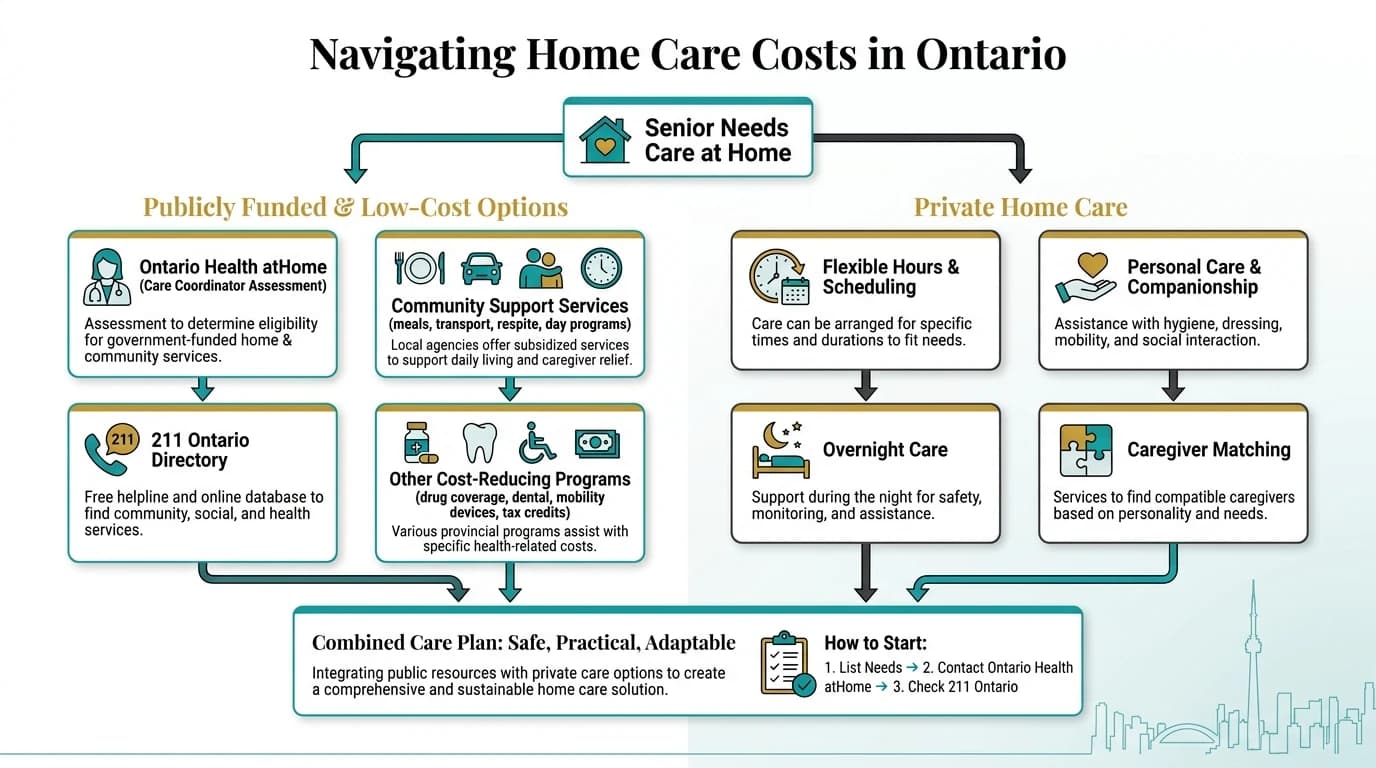
Understanding Free Home Care for Seniors
Families will often start looking for free home care for seniors when one of their loved ones becomes dependent on more care at home. There are publicly funded and subsidized programs available in Ontario, depending on the individual’s health requirements.
The truthful answer would be that while free or low-cost healthcare is useful, it may not address all of the needs of a family. There are many seniors who utilize both public healthcare services and private home health care to ensure they receive as much care as possible.
Publicly Funded Home Care Through Ontario Health atHome
Ontario Health atHome is generally the first place a family should contact if they are seeking publicly funded home care. The care coordinator will assess the requirements of the elderly individual to see what type of care might be suitable.
This support could range from nursing care, personal support, physiotherapy, occupational therapy, speech therapy, social work, nutritional counseling, and medical devices or equipment.
Community Support Services
Community agencies may provide inexpensive services that allow seniors to live comfortably wherever they call home. They differ depending on the region but may include meal delivery, transportation, adult day programs, respite care, friendly visits, homemaking and safety inspections.
A good place to start would be 211 Ontario , where individuals are connected with social service programs and community support networks. While these programs do not replace daily care, they could help alleviate any burnout or pressure families may have.
Other Programs That May Help Reduce Costs
Certain programs are available in some cases to help with the cost of health-related needs among seniors in Ontario. Such programs are not always home care programs, but still assist in making care at home more manageable.
Depending on eligibility, families can look into prescription drug coverage, dental care, assistive devices, mobility devices, home renovations, or tax credits. Since program guidelines keep changing, it is important to confirm your eligibility prior to applying.
Where Private Home Care Fits
These services can be great, but they may not offer the number of hours, timing or consistency a family might need. That's where private home health care comes into play.
Private home care could be beneficial if a senior requires care at specific times, assistance with personal care, companionship, meal preparation, overnight care or more specific caregiver matching. It can also be useful while waiting for public assistance to start or even after discharge from the hospital.
For most families, there is a need for both types of care. The overall goal is to develop a care plan that is safe, practical and adaptable.
Alternatives to Long Term Care
Sometimes families question what alternatives to long term care may be if their loved one wishes to stay in their own home. Options depend on each particular case and may include publicly funded home care, private home care, adult day services, respite care, family caregiving, and retirement living or even a combination of all.
Staying at home isn't an option for everyone, especially if someone has more care needs. However, there are many older adults who can continue living in their homes with the right support.
How to Start
Start with making a list of the care you might need. Think about things such as assistance in daily living, meal preparation, medication reminders, overnight supervision, and any safety concerns you may have.
Then, get in touch with Ontario Health atHome and inquire whether they can provide you with a public assessment. You can also use 211 Ontario to look up available programs within your community.
Frequently Asked Questions
Is home care free for seniors in Ontario?
Some home care services can be publicly funded depending on eligibility of the individual. The amount and types of services offered depends on their needs.
What if publicly funded care is not enough?
Families often use private home health care services in addition to publicly funded home care if there is a need for additional hours or due to specific schedules.
Can home care help delay long-term care?
Yes, but only in some cases. Home care, community services and even family assistance can help in keeping a senior at home for a longer period of time. But the decision really depends on safety, the individual's health needs, and caregiver capacity.
Contact us to learn more
If you’d like to know more about high quality homecare services in Toronto, Mississauga and the surrounding communities, please contact us. A member of our care team would be glad to answer your questions and make personalized recommendations. We look forward to speaking with you soon.